News Beyond Headlines
News Beyond Headlines
Blazing Tales News Service
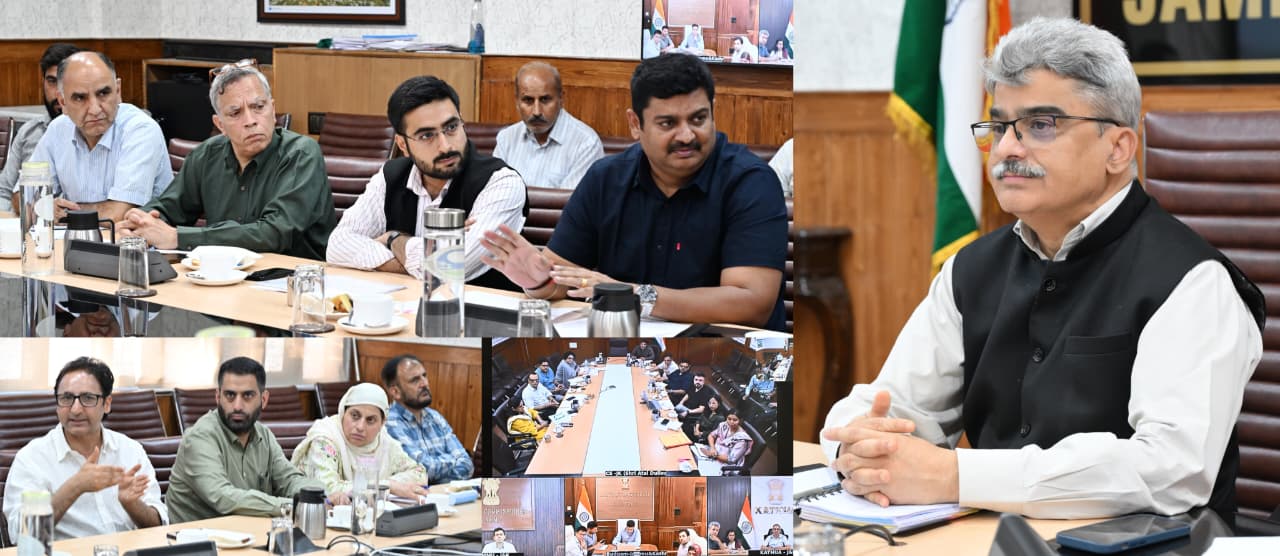
SRINAGAR, AUGUST 24: Chief Secretary Atal Dulloo chaired a high-level meeting to review preparedness for the implementation of the Phase-I Pilot of the Rehabilitation & Socio-Economic Reintegration Scheme for Drug Abuse Victims, 2026, being coordinated by the Social Welfare Department.
The meeting was attended by the Principal Secretary, Home; Commissioner Secretary, Health and Medical Education; Commissioner Secretary, Social Welfare Department; Deputy Commissioner, Srinagar; Head, IMHANS, Srinagar; Directors of Health Services, Jammu and Kashmir, and other concerned officers.
Deputy Commissioners from other districts and heads of institutions also joined the meeting through video conferencing.
The meeting reviewed the readiness of identified pilot institutions and districts, availability of human resources and infrastructure, capacity-building initiatives, inter-departmental coordination and the development of a dedicated digital mechanism for end-to-end monitoring of beneficiaries.
The Phase-I pilot is proposed to be implemented at IMHANS Srinagar, Addiction Treatment Facilities (ATFs) at Jammu and Kathua, and Budgam district. The pilot aims to test the rehabilitation model on the ground, identify operational gaps, refine the Standard Operating Procedures and generate necessary learning for its subsequent expansion across the Union Territory.
Taking stock of preparedness in the pilot districts, the Chief Secretary reviewed the availability of infrastructure and manpower at each location and stressed the need for focused training and capacity-building of Medical Officers, Counsellors, Case Managers, ASHA workers and SHG members so that each stakeholder is adequately equipped to discharge the role assigned under the rehabilitation framework.
Dulloo directed the Social Welfare Department to coordinate the implementation of the programme and ensure its early commencement. He further directed the department to simultaneously identify the required human resources and infrastructure for extending the rehabilitation mechanism to other districts so that the pilot exercise facilitates a smooth transition towards wider implementation.
He also sought a first-hand appraisal from the heads of the concerned institutions and Deputy Commissioners of the districts where the pilot is being initiated. Emphasising the importance of ground-level coordination, he observed that the success of the programme would depend on each stakeholder performing the designated role with commitment and ensuring seamless coordination throughout the rehabilitation process.