News Beyond Headlines
News Beyond Headlines
Blazing Tales News Service
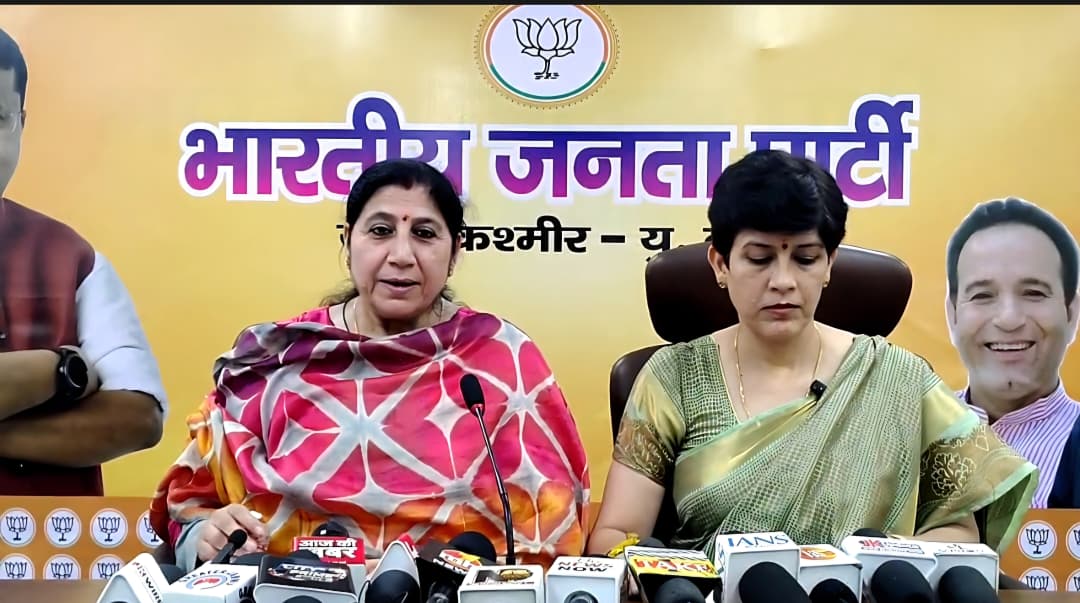
JAMMU, AUGUST 4: BJP spokesperson and former Deputy Mayor of Jammu, Advocate Purnima Sharma described the abrogation of Article 370 as a historic decision that ensured constitutional equality, social justice and the complete integration of Jammu and Kashmir with the rest of the country.
Addressing a press conference at the BJP headquarters along with party spokesperson Rajni Sethi, Sharma credited Prime Minister Narendra Modi and Union Home Minister Amit Shah for taking what she termed a landmark constitutional decision on August 5, 2019.
She said the move fulfilled the vision of “One Nation, One Constitution and One Flag,” adding that Amit Shah played a key role in translating that vision into constitutional reality.
Sharma said the Constitution of India became fully applicable to Jammu and Kashmir following the decision, extending to the people of the Union Territory the same fundamental rights and constitutional safeguards available across the country.
She said several central laws relating to education, women’s safety, child protection, social justice, disability rights, transparency and accountability were extended or adapted to Jammu and Kashmir. Among the legislations she highlighted were the Right to Education Act, the Scheduled Castes and Scheduled Tribes (Prevention of Atrocities) Act, the Rights of Persons with Disabilities Act, the Juvenile Justice Act and the Protection of Children from Sexual Offences (POCSO) Act.
Highlighting women’s empowerment, Sharma said laws relating to domestic violence, workplace sexual harassment, maternity benefits, property and succession now provide uniform legal safeguards. She added that Scheduled Castes, Scheduled Tribes, Economically Weaker Sections and other marginalised communities have also benefited from expanded constitutional protections, reservation provisions and welfare schemes, including EWS reservation.
She further said the implementation of anti-corruption laws had strengthened transparency and accountability in governance, while a uniform judicial framework had clarified the jurisdiction of the Supreme Court and other constitutional institutions in Jammu and Kashmir.
Referring to local governance, Sharma said the three-tier Panchayati Raj system had strengthened grassroots democracy by enhancing the participation of elected representatives in planning, financial decision-making and developmental activities.
She also stated that national economic legislations, including the Companies Act and the Insolvency and Bankruptcy Code, have created a more uniform framework for investment, entrepreneurship and employment. Greater clarity in property and inheritance laws, she added, has further strengthened the rights of women and other lawful heirs.
According to Sharma, national welfare provisions for minorities, senior citizens, persons with disabilities and other vulnerable sections have become more accessible following the constitutional changes.
Referring to the Supreme Court’s Constitution Bench judgment delivered in December 2023, Sharma said the court upheld the presidential measures that rendered Article 370 inoperative, affirming their constitutional validity.
Speaking on the occasion, BJP spokesperson Rajni Sethi described August 5 as a turning point for women, children and marginalised communities.
She said the Modi government removed constitutional barriers and ensured equal access to progressive national laws, describing the development as a reflection of the Prime Minister’s resolve and the Union Home Minister’s leadership.
Both leaders maintained that the abrogation of Article 370 had strengthened the vision of “Ek Bharat, Shreshtha Bharat” and laid the foundation for peace, transparent governance, investment and inclusive development in Jammu and Kashmir.